Quickly read Adorno's (1941) article 'On Popular Music'. In no more than a few paragraphs, summarise his ideas on pop music, concentrating on key points such as 'standardisation', 'psuedo-individualisation' etc.
Post a link to a YouTube pop video that, in your opinion, epitomises Adorno's sentiments. Explain why, trying to emphasise the links to the wider 'culture industry' in general.
Adorno views pop music as being inferior to 'serious music' because he believes it to be standardised and predictable. He goes on to describe that 'structural standardisation aims at standard reactions, meaning that people within the pop music industry already know what the listeners' reaction will be when they are making the music, and they intend to tap in to that. This can be viewed as a form of control in what the audience is subjected to an supports financially. This idea of foreseeing reactions is partly due to genres of music and people limiting and labelling themselves to certain genres, such as Metal music. You already know what type of thing you are going to get within the genre - 'the same familiar experience." This stops any element of surprise as 'the composition hears for the listener.' This implies that your free-thinking has been taken out of the equation as the listening is being done for you. Listening to music has become a passive activity as the music is 'pre-digested'. Especially within the genre of Metal I think it’s fair to say that there’s now so many sub genres such as death, death core, core, metal core etc that it’s broken down so much, when you listen to an artist labelling themselves by that genre they will sound like others of that area.
Adorno continues by revealing that 'concentration and control in our culture hide themselves in their very manifestation. Unhidden they would provoke resistance.' By this he means that if people knew overtly that they are being manipulated and only being offered a limited, standard choice, then they would resist. Therefore, it is necessary to disguise the fact that people are having their free-thinking taken away from them. This gives people the illusion that they have free choice, but in reality we don't. Mass culture, like pop music, keeps people in their place by making them think one dimensionally, rather than rebelling. This can be seen as almost depoliticising the working class, who Adorno sees as being the main consumers of pop music.
Maiden’s song represents Adorno’s idea well. Metal within this 1980’s era was probably the most standardised music ever. Whilst metal was still rather premature within this time it seemed only a limited few were being experimental, whilst labels were more focussed on the glam/hair metal capitalistic view on the industry.
The standardisation comes from the predictable guitar pinches, mixed tempo vocals and the essential solo placed three quarters in or nearly always at the end. If you were buying metal in this period you’d most probably heard it before. Although that’s not to say that things have changed now either. As with everything, everyone takes inspiration from other bands which incorporate into this cycle. It’s easy to spot how similar music was as we pass through the eras however at the current time, do we overlook this and just take it as something we enjoy rather than analyse?
Sunday, 27 February 2011

Friday, 12 November 2010
CTS 2 Critical Position on the media and popular culture
What is culture?
One of the two or three most complex words. A particular way of life. Intellectual and especially artistic significance. "Raymond Williams"
Marks concept of base
Base. Forces of production - materials / workers skills is the central base of modern culture.
The substructure is the idea of social institution - legal / politics.
If you change the base you change the way people think about the world.
Ideology
System of ideas if beliefs - beliefs and politics. Masking, distortion or selection of ideas to reinforce power relations, through creation of false consciousness.
Idea of popular is based on the inferior. Popular press bs quality press etc
Frankfurt School - critical theory
Institute of social research 1923-33
Closed with rise of hitlarrrr
Moved to new York 33-47 then 49 there on.
Reinterpretation of Marx for the 20th century - era of late capitalism.
Movies and radio need no longer pretend to be art. It's just business.
Qualities of authentic culture
Real
European
Multidimensional
Active consumption
Individual creation
Imagination
Negation
Autonomous
Conclusions
Tradition emerges from the mass culture which is seen as a threat to culture. Birmingham school starts to look at popular culture as a way forward to the working class.
Sent from my iPhone
Friday, 5 November 2010
CTS1 Panopticism
Panopticon is a building. Could be thought if as a metaphor for contemptory society.
Michael Foucault
26-84
Looked at the idea of madness and the idea of the prison.
Finds that madness was an acceptable part of society. Not excluded almost looked on fondly. From 17th cen onwards new ideas change. Combatting the idea of idleness, that everyone should work etc. People that didn't work were locked away, criminals, tramps, women or just people considered to be lazy.
Late 1600s. House of correction and idleness. Forced to work an that.
Discipline is now seen as a way of an keeping an eye on us.
1791 The panopticon
Prison with cells on the outside an a central tower in the middle. Round building. Makes then feel like they're always being watched. So you then don't step out of line. Self regulates there behaviour.
Because of the fact that we know where being watches or surveyed in some form makes us change our behaviour.
Someone only has power over you because you summit to that power.
Michael Foucault
26-84
Looked at the idea of madness and the idea of the prison.
Finds that madness was an acceptable part of society. Not excluded almost looked on fondly. From 17th cen onwards new ideas change. Combatting the idea of idleness, that everyone should work etc. People that didn't work were locked away, criminals, tramps, women or just people considered to be lazy.
Late 1600s. House of correction and idleness. Forced to work an that.
Discipline is now seen as a way of an keeping an eye on us.
1791 The panopticon
Prison with cells on the outside an a central tower in the middle. Round building. Makes then feel like they're always being watched. So you then don't step out of line. Self regulates there behaviour.
Because of the fact that we know where being watches or surveyed in some form makes us change our behaviour.
Someone only has power over you because you summit to that power.
Cts Lesson
Fucauldian Termonology
Surveillance studies - David Lyon
Docile Bodies
Easily controlled obedient. Key condition for the subject under our contemporary society. Takes instruction and is easily controlled. The body is productive for the purposes you use it for.
Power
People submit to it, it's not automatically there. Power is a relationship and there's a possibility to challenge.
Panoptacism as a metaphor
The gaze of one onto another.
Discipline
Not physically exercised but something mote subtle and mental.
Check the CTS blog page..
Task --------
Choose an example of contemporary society or institution of what you think is panoptic. 3oO words, least 5 quotes from text on sheets. Use terminology.
Key points from text
Extremely controlled leaving people powerless to the person in control.
Very regimented and documented
No one can treat people but one person alone, and at his right or will alongside the higher ache.
Discipline becomes a sense of power.
You can change your identity. At festivals you can share your experiences.
The idea if getting rid of anyone that we don't see to be pure or like us. Much like the nazi theorem.
Seen but does not see. Cannot communicate with others. In prison they are completely shut off, a form of control.
Idea that they're constantly being monitored automatically conforms the subject up to the point where it would be unmanned and still retain the same effect.
All panoptic powers need to enforce the idea that they 'could' be observed at any time but they would not be sure when.
TASK
Tracking cookies is probably the best example of internet watching. They track the information that we look at online, most commonly on shopping websites. Products we look at on the internet are remembered so when we look at other web pages; items we previously viewed will then reappear in an advertising window. This modern form of advertising is there to play an influential role of the user. This then takes us from the watcher as an authority to the watcher as a persuader. The most important factor behind this and the reason it still exists, is because it actually works and shopping websites will pay for this string of code acting as the watcher as it generates income for the store, and income for the in between, the coded watcher.
Internet security however can always be broken. As a user we place a lot of trust in the holder of our information. The PlayStation Network was recently broken into releasing millions of users information into the open. This was a huge embarrassment for Sony Corporation and also a huge breach in security and a loss of trust with its users. The point to be made here is that we feel we can always trust an authority, trust them so much that we feel ‘safe’ giving personal information such as banking and addresses. However what we can easily forget is that authorities can always be broken and influenced. In terms of prisons systems, a guard could be bribed, a police officer could be persuaded and the whole system we believe and trust in falls down. The idea of the watcher being secure is then maybe false. There is perhaps a chance to take control and influence the watcher if we wish, because the watcher is always human, either in person or behind a computer, and therefore open to the idea of misusing his or hers position as the governing body.
Sent from my iPhone
Saturday, 15 May 2010

Here is the poster for the James Bond Film ‘Casino Royale’. The poster has been designed to show the audience what the ‘new Bond’ is all about. This was Daniel Craig’s first role in the films and as expected not everyone was convinced by the casting choice. However the poster has been designed to portray Craig in many ways.
The first thing we tend to see is Bonds contrast between the grey background, used to emphasising the character. The suit, slightly open suggests movement with the sense of style and wealth. The use of the undone tie and gun signifies that the character is a little loose and sloppy in approach.
The outlined figure of the girl suggests glamour and mystery as we cant see her face. The fill contains the hotel, another suggestion of wealth and power as well as the new Bond car, the Aston Martin. The car counterpart, complements and reflects well on the image that Bond is given in this film, both being depicted as stylish, expensive and the idea of power. We relation of speed and movement could also be said of the jacket and the car.
Monday, 5 April 2010
Summary of Text
Harrison, C. and Wood, P (1997) Art in Theory: 1900 – 1990, Oxford, Blackwell, pp 125-9.
Throughout the 1900s there was a new form of art, expressionism, where artists were able to express themselves through the medium.
The start of world war one saw the advent of cubism. As different styles of the European avant-garde’s view of the modern came about, they moved away from the traditional French styles and towards an expressive viewpoint with Cubism. During modernisation the world saw changes in the rise of machinery and the possibilities of production. At the turn of the century the ‘new’ was ousting the old and modernity refers to the social and cultural condition of these objective changes.
Italian poet ‘Marinetti’ brought forward Symbolism and viewed the modern differently and attempted to focus upon change. The responses by artists to modern thinking were all responses to the effects of modernisation. Politics and a century long conflict have ensured that expressionism and Futurism were a response to urban modernity whereas Cubism remained analytical in its style. Cubism developed to post-avant-garde art. Cubism now marks a new era in art, leaving behind 19th century modern art and entering the 20th century with new condition of modern art.
Throughout the 1900s there was a new form of art, expressionism, where artists were able to express themselves through the medium.
The start of world war one saw the advent of cubism. As different styles of the European avant-garde’s view of the modern came about, they moved away from the traditional French styles and towards an expressive viewpoint with Cubism. During modernisation the world saw changes in the rise of machinery and the possibilities of production. At the turn of the century the ‘new’ was ousting the old and modernity refers to the social and cultural condition of these objective changes.
Italian poet ‘Marinetti’ brought forward Symbolism and viewed the modern differently and attempted to focus upon change. The responses by artists to modern thinking were all responses to the effects of modernisation. Politics and a century long conflict have ensured that expressionism and Futurism were a response to urban modernity whereas Cubism remained analytical in its style. Cubism developed to post-avant-garde art. Cubism now marks a new era in art, leaving behind 19th century modern art and entering the 20th century with new condition of modern art.
Tuesday, 23 March 2010

Wednesday, 4 November 2009
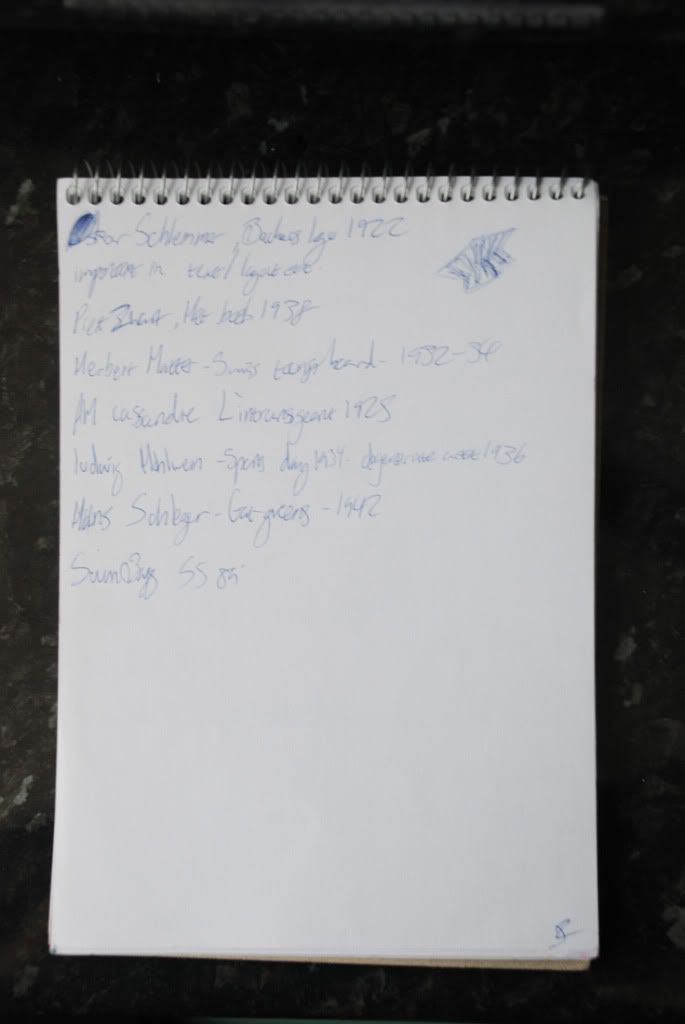
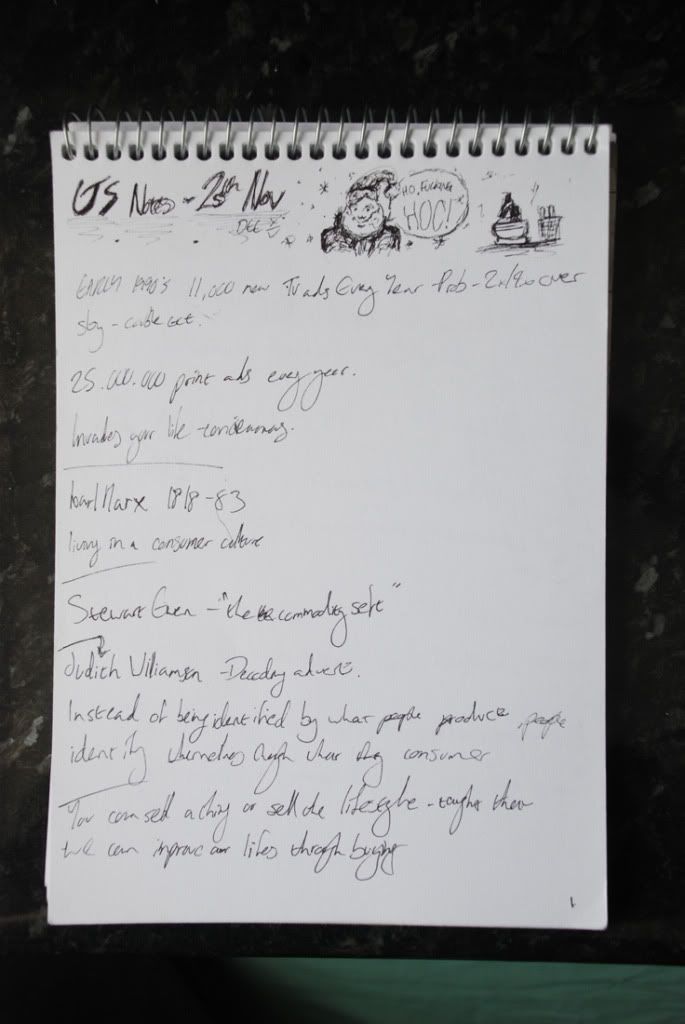
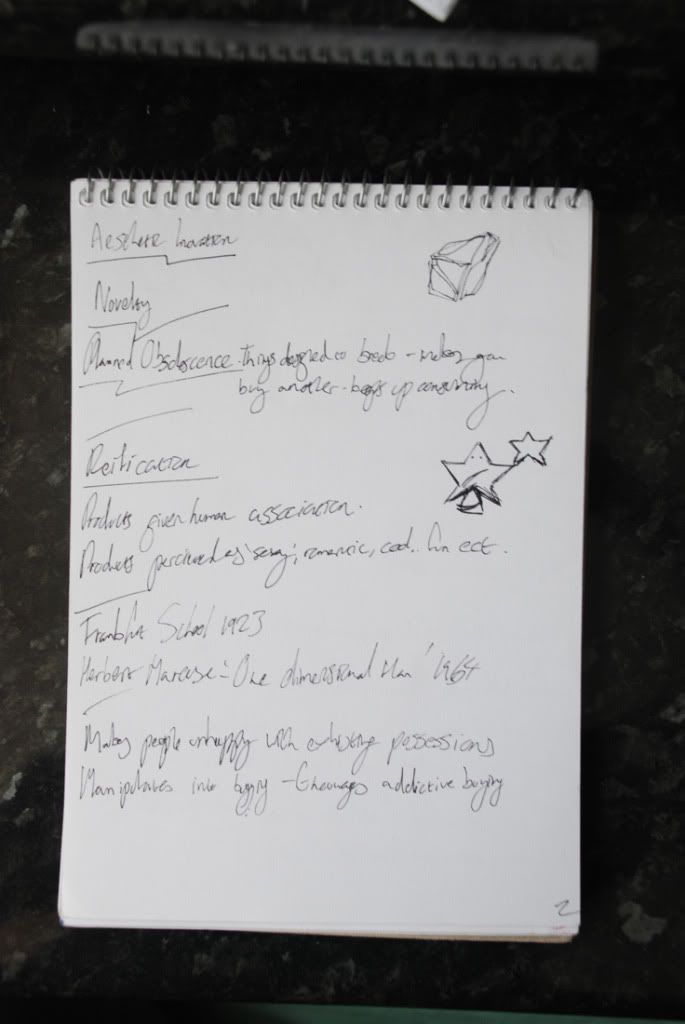
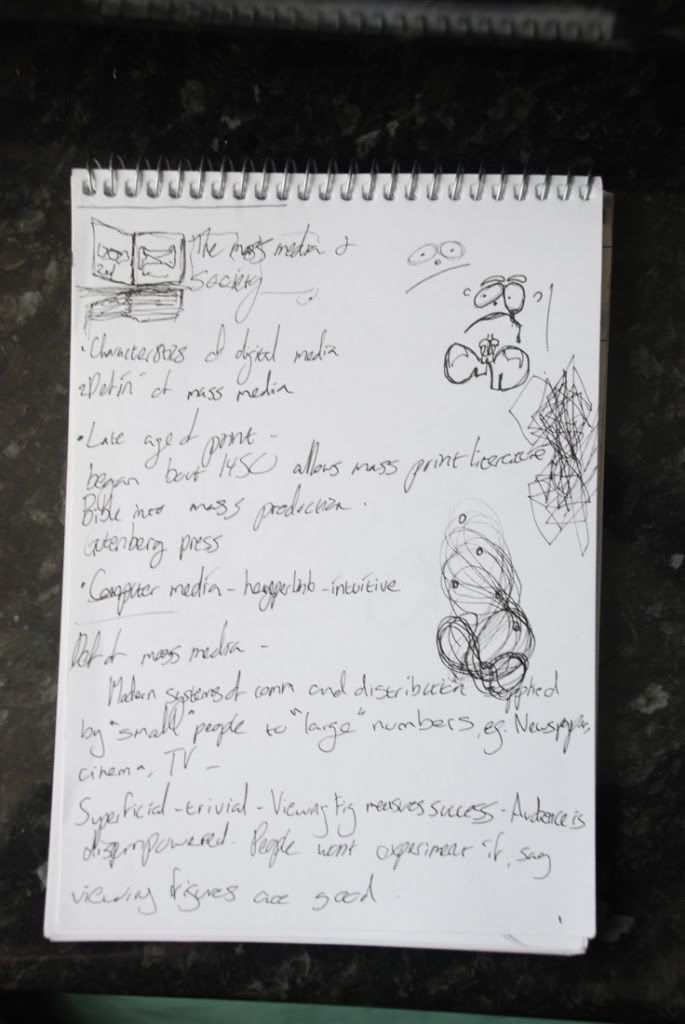
Design Context 1
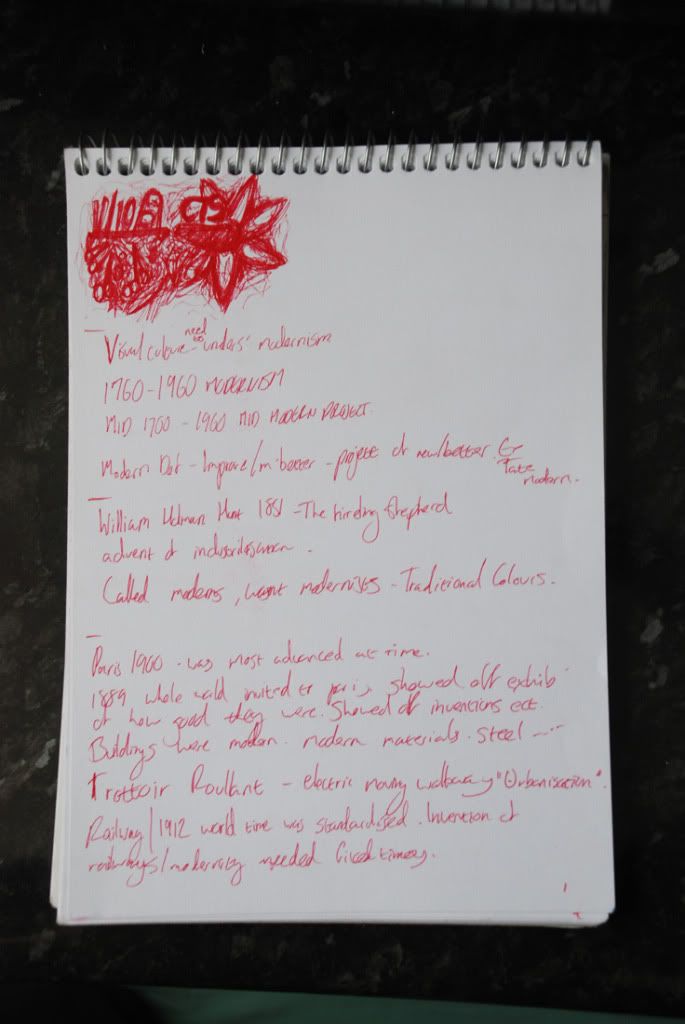
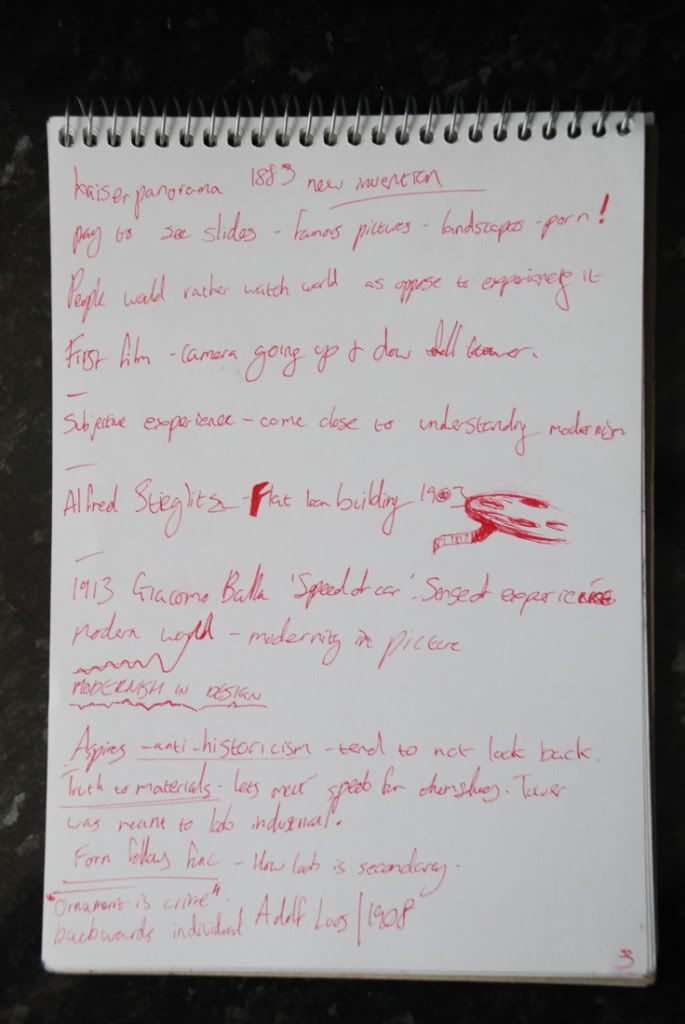
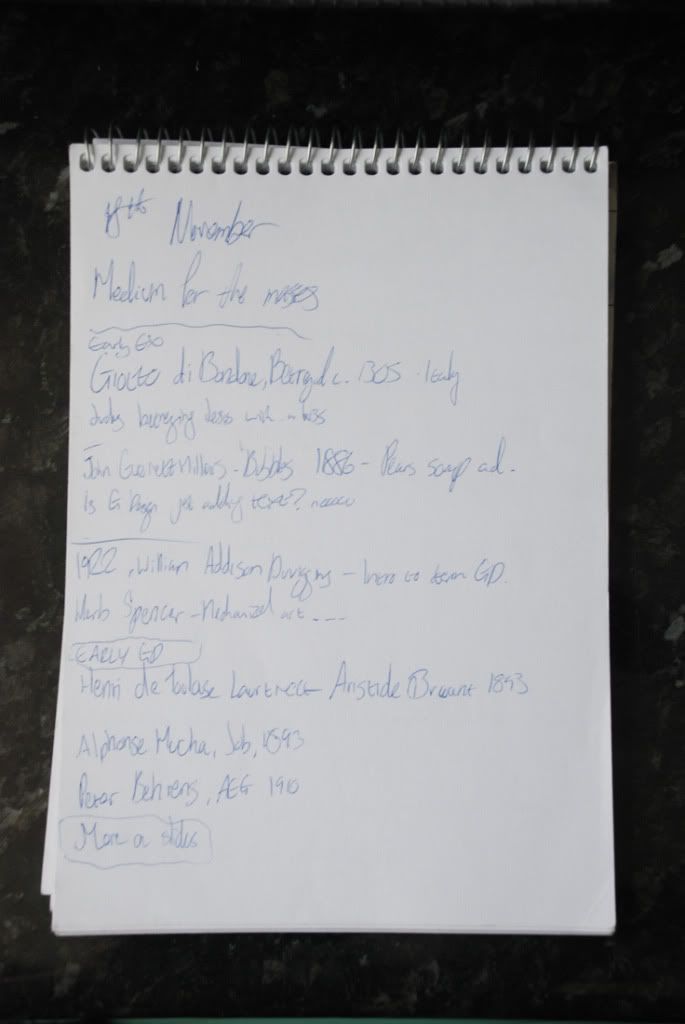
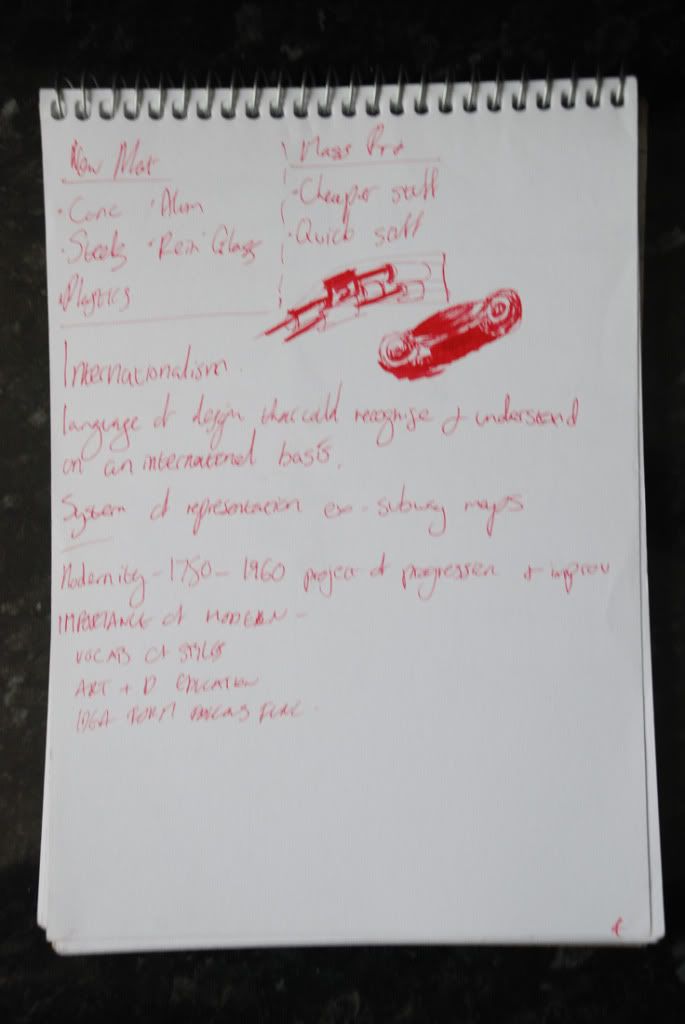
With the introduction of Design Context we initially discussed what Design context was and how we can make the most out of the sessions.
We then started to explore the meanings behind some work. The first image we looked at was ‘The Uncle Sam Range” by Schumacher & Ettlinger in 1876.

There’s a hell of a lot of things going on in this image and think I over thought about it and missed the point. The clock in the image is drawn with 1776 at the bottom and the hand is just about to turn 1876. So this was celebrating a 100 years of the Declaration.
The mass amounts of patriotism, obviously indicates the setting is America. This is supported by the classic ‘Sam’ character in the centre, and sat at the front, possibly leading the way in this metaphoric sense. The globe sat the table as well could also indicate that if it was a celebration, the world was invited. The bill of foods in his hand is pretty stereotypical stuff, France, flogs, Ireland, only potatoes. To say this is 100 years on it still seems pretty ignorant.
Anyway, it turns out after all this its an advert for a cooker?! Wasn’t expecting that, but the idea is that the significance of all of this is that if you buy this cooker you could be like this. Even though is does look expensive it’s apparently aimed at the lower classes. The idea is that the upper classes would already have this life style and the image is communicating the idea that this is what you can aspire. The basic language on the bill is also used to support this.
The use of font is shown in a typical western style, which is signifying the ‘great-ness’ of America, the west turning wasteland into a civilised society, so to speak.
______________________________________________________
The second image was a little clearer and easier to read. The image is called “Daddy, what did you do in the Great War?” and its by Saville Lumley (1915)

So this image is an advertisement for enrolling in the army. I didn’t actually think in this war you were really given a choice about whether you could or couldn’t, if you could walk, you were in. As Richard said in the lecture most working class people would have enrolled anyway, as they didn’t have much else to loose but in this image we have a father of two in a typically British home. We know its Britain because of the figures the boys playing with and the pattern on the chair.
So if this image is it not aimed at working class, it must be the middle to upper. The use of text in this image, the italicised font makes it more personal. We usually see this type when we want to emphasise a piece of writing as well so it works well. It’s also not a formal looking font either which helps pose it as a spoken question, from the children.
The kids themselves are playing with toy soldiers and the daughter’s reading a book and appears to be asking the main question. This makes it much more personal and lays on a sense of guilt to the viewer. It’s also glamorising the war as well, ‘Great War’. Capitalising the first letter to make it become an official name.
We then started to explore the meanings behind some work. The first image we looked at was ‘The Uncle Sam Range” by Schumacher & Ettlinger in 1876.
There’s a hell of a lot of things going on in this image and think I over thought about it and missed the point. The clock in the image is drawn with 1776 at the bottom and the hand is just about to turn 1876. So this was celebrating a 100 years of the Declaration.
The mass amounts of patriotism, obviously indicates the setting is America. This is supported by the classic ‘Sam’ character in the centre, and sat at the front, possibly leading the way in this metaphoric sense. The globe sat the table as well could also indicate that if it was a celebration, the world was invited. The bill of foods in his hand is pretty stereotypical stuff, France, flogs, Ireland, only potatoes. To say this is 100 years on it still seems pretty ignorant.
Anyway, it turns out after all this its an advert for a cooker?! Wasn’t expecting that, but the idea is that the significance of all of this is that if you buy this cooker you could be like this. Even though is does look expensive it’s apparently aimed at the lower classes. The idea is that the upper classes would already have this life style and the image is communicating the idea that this is what you can aspire. The basic language on the bill is also used to support this.
The use of font is shown in a typical western style, which is signifying the ‘great-ness’ of America, the west turning wasteland into a civilised society, so to speak.
______________________________________________________
The second image was a little clearer and easier to read. The image is called “Daddy, what did you do in the Great War?” and its by Saville Lumley (1915)

So this image is an advertisement for enrolling in the army. I didn’t actually think in this war you were really given a choice about whether you could or couldn’t, if you could walk, you were in. As Richard said in the lecture most working class people would have enrolled anyway, as they didn’t have much else to loose but in this image we have a father of two in a typically British home. We know its Britain because of the figures the boys playing with and the pattern on the chair.
So if this image is it not aimed at working class, it must be the middle to upper. The use of text in this image, the italicised font makes it more personal. We usually see this type when we want to emphasise a piece of writing as well so it works well. It’s also not a formal looking font either which helps pose it as a spoken question, from the children.
The kids themselves are playing with toy soldiers and the daughter’s reading a book and appears to be asking the main question. This makes it much more personal and lays on a sense of guilt to the viewer. It’s also glamorising the war as well, ‘Great War’. Capitalising the first letter to make it become an official name.
Subscribe to:
Posts (Atom)
